Semicarbazide-sensitive amine oxidase (SSAO) is a common
name for a widely distributed enzyme in nature. In man this
enzyme is present in the vascular system and circulates in
plasma. SSAO differ from the monoamine oxidases A and B in
substrate and inhibitor patterns. These enzymes have been
widely studied and their tissue distribution, molecular
properties, substrate specificities and inhibitor
sensitivities are extensively reviewed (2,3).
SSAO exists in two forms: tissue bound and soluble
(plasma SSAO). Tissue bound SSAO acitvity is associated with
blood vessels, mainly in smooth muscle layers, however it is
also associated with spleen, placenta, bone marrow, kidney,
sclera, retina, endothelial cells, adipocytes, chondrocytes
and fibroblasts. (4,5). Evidence suggests that Plasma SSAO
originates from the cleavage of membrane-bound form. The
possible sources of plasma SSAO are still unclear, but it
has been suggested that it may be derived from liver,
retina, placenta and bone tissue (6,7,8).
SSAO’s functional role has been suggested to be involved
in: apoptosis, atherogenesis, cell adhesion, leucocyte
trafficking, glucose transport and local production of
hydrogen peroxide. Reports of elevated levels of SSAO have
been reported in congestive heart failure, diabetes
mellitus, alzheimer’s disease and various other inflammatory
diseases (1).
Furthermore byproducts of SSAO deamination, such as
formaldehyde and methylglyoxal, have been proposed to be
involved in pathogenesis of cancer, aging and
atherosclerosis.
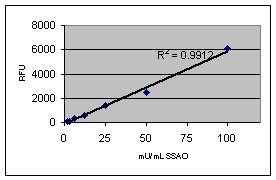
The Fluoro SSAO detection kit utilizes a non- fluorescent
detection reagent, to detect H202
released from the conversion of Benzylamine to Benzaldehyde
via SSAO. Furthermore H202 oxidizes
this detection reagent in a 1:1 stoichiometry to produce a
fluorescent product resorufin. This oxidation is catalyzed
by Peroxidase.


 GENTAUR Germany
 GENTAUR Italy
 Česká republika
Praha
Česká republika
Praha Danmark
 Finland Helsset
 Ελλάς Αθήνα
 Ireland Dublin
 Luxembourg
 Magyarország
Budapest
Magyarország
Budapest Nederland
 Norge
Oslo
Norge
Oslo Österreich
 Sverige
Stockholm
Sverige
Stockholm Schweiz Züri
 Canada Montreal
 US New York
 日本
日本
 Benzaldehyde + NH3
+ H202
Benzaldehyde + NH3
+ H202